Redefining Leadership in Governance
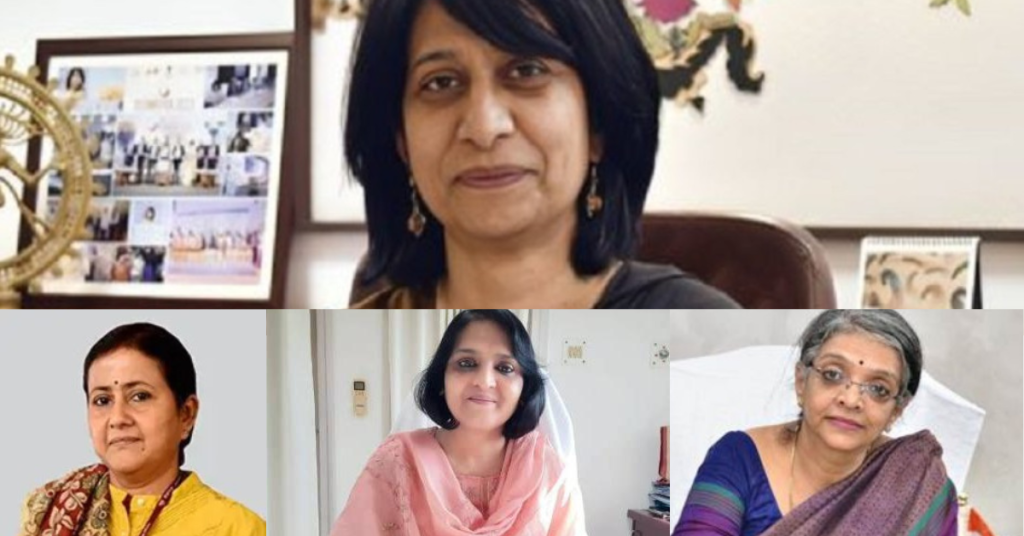
There was a time not too distant, yet deeply ingrained when the echo of authority carried a predictable tone. A chair of power was almost instinctively imagined to be occupied by “Sir”. The corridors of governance, lined with files and final decisions, were long shaped by this assumption. And yet, quietly but steadily, that image has begun to change. Today, the chair speaks in a different voice. It is no longer an exception. It is a transition that is visible, measurable, and deeply consequential. Across India’s governance landscape, women are not just entering institutions; they are influencing how those institutions think, act, and respond. Their leadership is not symbolic it is shaping systems, refining processes, and bringing governance closer to people. At the center of this shift are some prominent women leaders contributing to the evolution of governance.
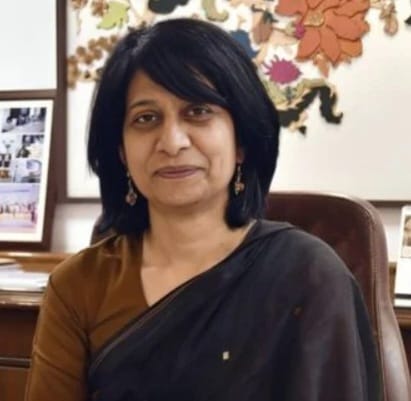
Rachna Shah as Secretary, Department of Personnel and Training, IAS officer from the 1991 Kerala cadre. She holds a B.A. and M.A. from Delhi University. Currently, she serves as Secretary in the Ministry of Personnel, Public Grievances and Pensions (MoPPGP) at New Delhi. Throughout her career, she has held various positions including Secretary, Additional Secretary, Joint Secretary, Officer on Special Duty, District Collector. As Secretary, DoPT, she is not only steering office procedure and rules, but also ensuring citizen centricity in day-to-day functioning, welfare of employee, in-house and bringing ease of work in the department culture, expansion of e-HRMS 2.0.
At the 18th Civil Services Day on 21st April,2026, she participated actively in deliberations on governance and moderated a panel featuring eminent civil servants and receives appreciative applause
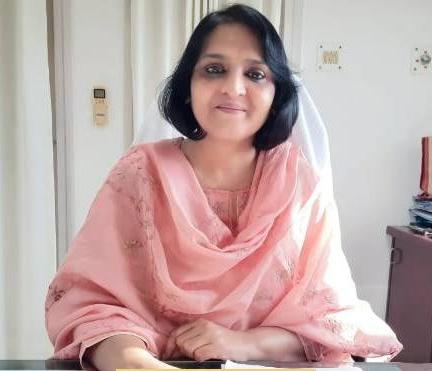
Nivedita Shukla Verma, a 1991-batch IAS officer of the Uttar Pradesh cadre, currently serves as Secretary in the Department of Administrative Reforms and Public Grievances (DARPG) and holds the charge of additional Secretary in the Department of Pensions and Pensioners’ Welfare. She is driving key administrative reforms and strengthening public grievance redressal systems with a focus on efficiency, transparency, and accessibility. She earlier served as Secretary in the Department of Chemicals and Petro-Chemicals.
At DARPG, she is advancing e-governance initiatives aimed at making public services more citizen-centric and digitally accessible. The department promotes digital transformation across ministries, supports best practice sharing, and strengthens platforms like CPGRAMS (Centralized Public Grievance Redress and Monitoring System), which has been instrumental in streamlining grievance handling and improving accountability since 2007.DARPG continues to enhance digital governance by improving platform integration, encouraging data-driven decision-making, and simplifying administrative processes.
She was also closely involved in organizing the 18th Civil Services Day, contributing to the coordination of the day-long programme and facilitating engagement among civil servants.
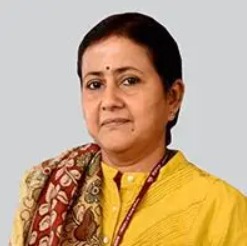
S. Radha Chauhan, Chairperson, Capacity Building Commission (CBC), a seasoned bureaucrat from the 1988 batch of the Uttar Pradesh cadre(retd.), has had an illustrious career in public service, including her tenure as Secretary of the DoPT.She was the
former CEO of GeM and viewed it as a paradigm shift in the government’s engagement with market system, worked in several senior leadership roles at both central and state levels; known for her administrative acumen and reform oriented approach, her entire effort during recently held Sadhana Saptah a ten-day nationwide initiative held under Mission Karmayogi was to promote continuous learning, self-reflection, and competency-driven capacity building among civil servants directed toward aligning administrative capabilities with the broader objectives of Viksit Bharat.
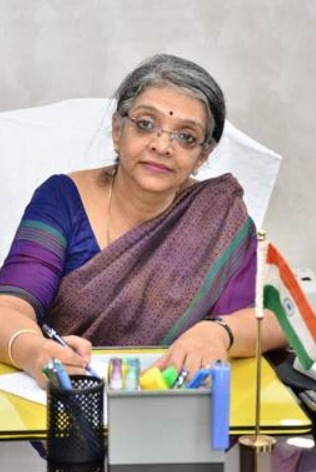
T.C.A. Kalyani, Controller General of Accounts (CGA), Department of Expenditure, is the 29th CGA and the first woman to hold the post. She holds an M.A. in Political Science and an M.Phil. in West European Studies from Jawaharlal Nehru University (JNU). With over 34 years in the Indian Civil Accounts Service, she has served across ministries including Defence, Home Affairs, Telecommunications, Fertilizers, and Social Justice, driving key reforms in public financial management and digital governance, recognized for her pioneering role in implementing the Direct Benefit Transfer (DBT) scheme for fertilizer subsidies, improving efficiency and financial inclusion.
At MTNL, led several digital transformation initiatives such as online billing and payment kiosks, and she also contributed to the revival of the Fertilizer Corporation of India Ltd. As CGA, her role as the principal advisor on accounting matters to the Government of India, preparation of consolidated Union accounts, overseeing payment and accounting systems, developing accounting policies and reforms, and ensuring fiscal discipline and financial reporting.
The Union Public Service Commission now has three women members including, Ms. Suman Sharma a distinguished officer from the Indian Revenue Service (Income Tax),1990 batch,Smt. Anuradha Prasad who was the former secretary in the Government of India and Smt. Sujata Chaturvedi a 1989-batch IAS officer from the Bihar cadre.
Together, these women represent different pillars of governance and administration, capacity building. Their work does not rely on rhetoric; it stands as clear evidence of their ability to perform at par with those who came before them, reaffirming that leadership is defined by capability, not gender. They lead meetings where decisions carry weight, design systems that shape the lives of millions, and ensure that governance is not only efficient but deeply rational and responsive. In doing so, they demonstrate that true leadership is not just about authority, it is about insight, balance, and the ability to act with both firmness and understanding.
This shift is not merely about representation; it is about redefining the very idea of leadership itself. Women are not only proving that they can lead they are showing that leadership can be exercised with strength and grace, with decisiveness and empathy. India’s governance landscape is dynamic and continuously evolving, with women contributing to their fullest potential and participating in steadily increasing numbers.