
India is a country of a rich diaspora including cultures, communities groups and subgroups attempting to live together harmoniously while maintaining their identity uniqueness and get a common allegiance to the core values that are the underlined fabric of this great country and its constitution.
Women have played a central role in our culture Right from the time of epics to Modern politics, International relations, Cinema, Writing, Teaching etcetera. The greatest testament to the importance of females in India is that the goddess of knowledge is Saraswati, the goddess of Wealth is Lakshmi, all rivers, that have been considered the sources of life, are considered female. The embodiment of female strength are replete across our historical figures, mythical creatures and very own members of a family.
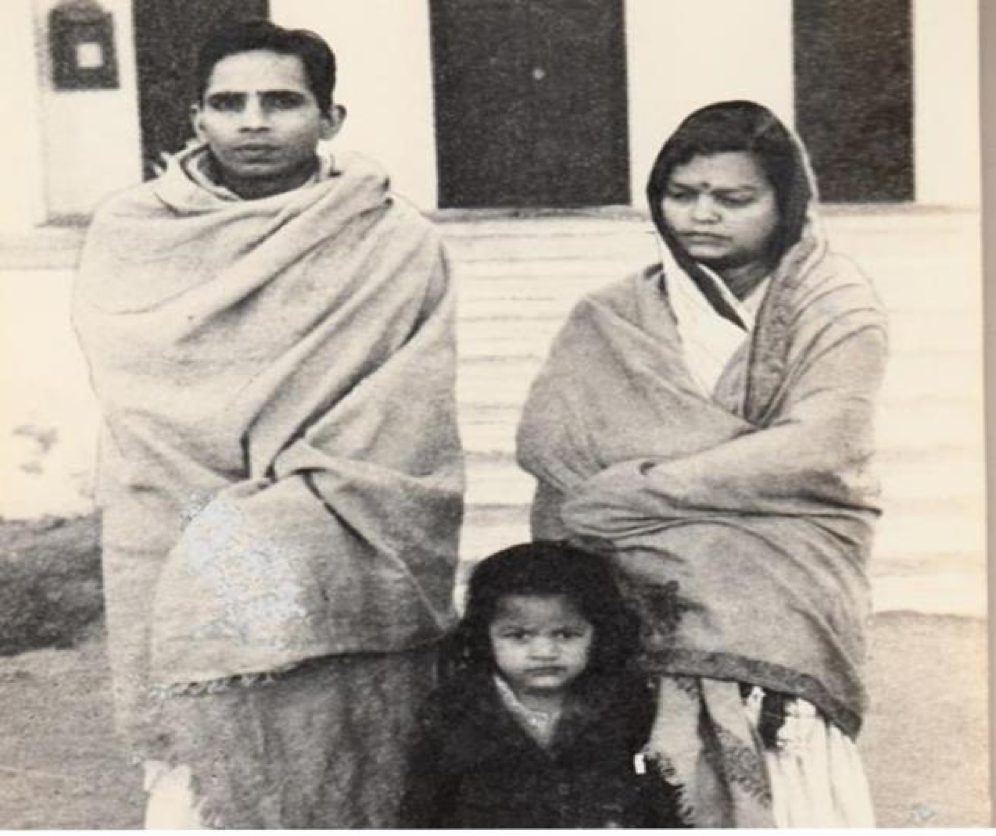
I have been fortunate to grow up in a house of strong women. as a proud successor of the lineage of Subhadra Kumari Chauhan I have heard many Tales of what it was like when she were so deeply involved in the freedom struggle and social reform, right from the age of 17, having joined the Non Cooperation Movement of 1921 and never ever stopping, to give consideration to any remarks by family, friends opposes or even random strangers, in her quest to do whatever is possible to help her country attain Independence from foreign rule.
Subhadra ji or Ma, as we call her, was known to break all societal barriers of class, caste and creed. It is well known that she did not believe in the impurity of the people of the lower caste. Sometime in 1920 or 21 she went to the wedding of the daughter of the house help when she came to know about it when the lady asked her for time off from work. On questioning as to why she was not invited the answer was that it was believed that she would not enter the house of a member of the lower caste, as was the practice in those Times. Not only did she attend the wedding But also participated in all the rituals.
This incident resulted in many members of the family and the community choosing not to step into her home condemning it as impure and dirty. Needless to say, she was unbothered and unfazed by this criticism and almost excommunication. This steadfast belief in equality of all has permeated through the generations. For us there is no difference in who we are, or who is the person that tends to the garden. We are all one, we are human.
There are many families where despite all education and exposure, there is a palpable disbalance in the power equation, favoring the male. That is to say that the unequal power equation is not unique to the less educated or the less fortunate. This exposure of knowing that my great grandmother was, so many years ago, addressing large meetings, going on strike, going to jail leaving young children at home, and her husband was her biggest encourager, speaks volumes about the forward thinking that those two had.

There are also other examples before my eyes that tell me that the woman is not any less than a man, and might even be better than a man in some respects, and that if a man does something to help and support a woman, he is not ‘allowing’ her to do what she wants, or doing her a ‘favor’ he is only doing what is his obligation, as an equal partner in life. Ma’s youngest daughter Mamta, is a trained Hindustani Classical Vocalist, living in the US. She had emigrated there in the late 1960’s when her husband, Dr. Arvind Bhargava, got the opportunity to pursue a postdoc fellowship there. She returned often after her first child was born in 1972 for long periods of time, at least three or four months at a stretch to learn from her gurus- Pandit Vijay Kichlu, Pandita Girija Devi, who were at Calcutta’s Sangeet Research Academy. Her son would be left in the care of his father, or sometimes brought along with her to India.
If I look at my own mother- as an only child, she dealt with many hardships with no siblings to support her. I have physical disabilities, and when I was to be operated upon at the age of 5, she had to take care of me when we were in the US staying with family. My maternal grandparents, both had horrible diseases that brought them to their ends, and my mother fought through it all.
There are innumerable stories of such exemplary courage in India and across the world. It is high time that we as a society are able to evolve to give the woman her long overdue position, equal to that of men, and salute the resilience and strength they possess. It is an honor for me to have such path breaking ancestors, and women around me who I can imbibe from, even a few droplets of the vast oceans of wisdom that they have to offer me. 
Ishan Chauhan is a Short Story Writer from Jabalpur, MP. He has published two collections- Misgivings of My Fraternity in 2017,
and Secrets- A Collection in 2019. He is currently working on editing two anthologies.
Ishan Chauhan is the grandson of Subhadra Kumari Chauhan (16 August 1904 –15 February 1948) who was an Indian poet. One of her most popular poems is “Jhansi ki Rani” (about the courageous Queen of Jhansi).
