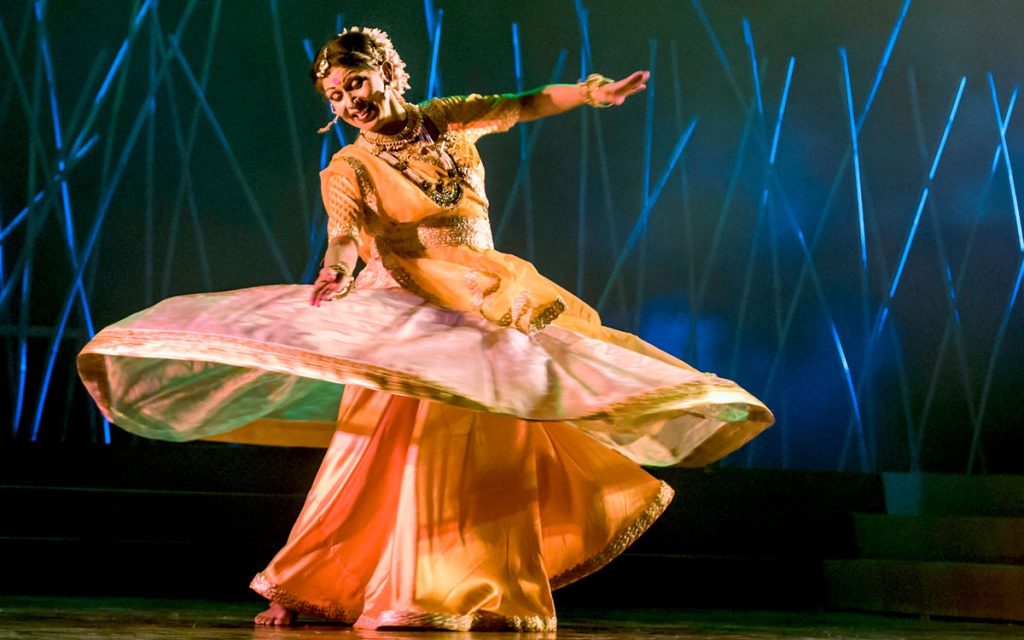
Before the music begins and the ghungroos find their rhythm, there is a quiet pause that holds the promise of what is to come. It is in this moment that an artist prepares not just to perform, but to connect. Shovana Narayan stands as a remarkable example of such an artist, whose life reflects a rare balance of discipline, dedication, and a deep engagement with both art and intellect.
Shovana Narayan is among India’s foremost Kathak exponents, known for balancing a distinguished career in the Indian Civil Services with an exceptional journey in classical dance. More than a dancer, she is a choreographer, scholar, author, and cultural thinker who has significantly enriched Kathak through performance, research, and writing. Her body of work includes important publications such as Kathak and Indian Classical Dances, Kathak: Rhythmic Echoes & Reflections, Indian Theatre and Dance Traditions, and Kathak Lok Temples, Traditions and History, reflecting her deep engagement with the intellectual and historical dimensions of the art form. A detailed biography on her life and journey, “I Am a Fleeting Moment in Time: Kathak Guru Shovana Narayan” by Dr. Maya Parijat (2025), offers an intimate exploration of her dual legacy as a dancer and civil servant.
Her contributions have been recognised with the Padma Shri in 1992 and the Sangeet Natak Akademi Award in 2001, along with numerous national and international honours such as the Bihar Gaurav Award and the OISCA Award (Japan), among many others.
Her journey in Kathak began very early. She started training at the age of two and a half and stepped onto the stage by four. By the late 1960s, she had already begun receiving professional recognition while continuing her studies. With over seventy years on stage and more than five decades of sustained acclaim, her career reflects both talent and extraordinary discipline.
Alongside dance, she pursued academics with equal dedication, completing her BSc Honours and MSc in Physics and conducting research in solid state physics as a CSIR Junior Fellow. In 1976, she entered the Civil Services, building a distinguished administrative career while continuing her artistic pursuits.
Even today, after retirement, she remains deeply engaged in performing, writing, and lecturing. Her guiding belief remains clear that whatever one chooses must be pursued with intensity, dedication, depth, and love, supported by strong time management.
Avani from Her World India team supported by Hetal and Srishti caught up with Shovana Narayan in an exclusive interview, where she shared her experiences, advice, and reflections and as the conversation began, her voice, soft and clear like the gentle chime of glass, set a graceful and reflective tone for what followed.
Q. Could you share your journey as a Kathak exponent alongside your distinguished career in the civil services? How did you navigate and balance these two demanding worlds?
Ans- ” I stepped onto the stage at the age of four, and by the late 1960s, recognition had already begun to find me. What followed became a lifetime, over seventy years on stage, with more than five decades of sustained professional presence.
Even as a child artist, while I was performing and appearing in public spaces, I remained deeply committed to my studies. Both journeys grew together. I went on to complete my BSc Honours and MSc in Physics, pursued research as a CSIR Junior Fellow, and in 1976, entered the Civil Services.
For me, these were never two separate worlds. They were bound by the same discipline and sincerity. Today, though I have retired from service, dance continues to remain at the centre of my life.
Balance, I believe, comes naturally when there is love for what you do. Whatever you choose, do it with intensity, depth, dedication, and above all, with love.”
Q. Over the years, how has your relationship with Kathak evolved, both as a life experience and as a personal expression?
Ans – “When I entered Kathak at the age of two and a half or three, I did not feel I was learning something new. I felt I had found something that already belonged to me. It was my soul, my method, my inner voice.
Kathak became my window to the world within. Where words pause, movement begins. Through it, I expressed thoughts, emotions, silences.
It also grounded me. It taught me to keep my feet firmly on the earth and my mind steady. Positions, titles, recognition, all are temporary. What remains is you, yourself, as a person. That is what Kathak has constantly reminded me.”
Q. Who were your inspirations and who would you call as gurus who has shaped you?
Ans – “The first and deepest influence in my life was my Mother. She was the one who shaped and moulded me, who introduced me to Kathak at the age of two and a half. Coming from a world of literature and social service, and from a freedom fighter’s family, she gave me not just direction but values. She was my guru in every sense of the word.
My formal training began with Guru Sadhana Bose in Kolkata, who guided me in my early years. Then came Guru Kundan Lal Sisodia of the Jaipur Gharana, who gave me a strong and lasting foundation over several years.
From 1964 onwards, for nearly fourteen years, I trained under Guru Birju Maharaj ji, who refined my aesthetics, expression, and depth in dance. My musical sensibilities were further enriched by the influence of Naina Devi, the renowned thumri singer. Each of them shaped a different dimension of my being, and together, they built the artist I became.”
Q. Kathak is deeply rooted in storytelling. How do you use it to express different aspects of life, emotions, and contemporary realities?
Ans- “Storytelling is not limited to words and structured narratives. It is communication itself. A glance can express friendship, an expression can convey anger, and even silence can speak. Everything is narrative, whether verbal or non verbal. Drawing from the Natyashastra, she explains that the purpose of dance is to inspire and instill values while remembering the stories and leelas of the divine. Whether it is Krishna’s playful acts or episodes like Draupadi’s disrobing, storytelling has always been intrinsic to classical dance. At the same time, she believes that even everyday life holds stories. A child stealing a biscuit can become a Krishna for the mother. In this way, life itself becomes a continuous unfolding of narratives.”
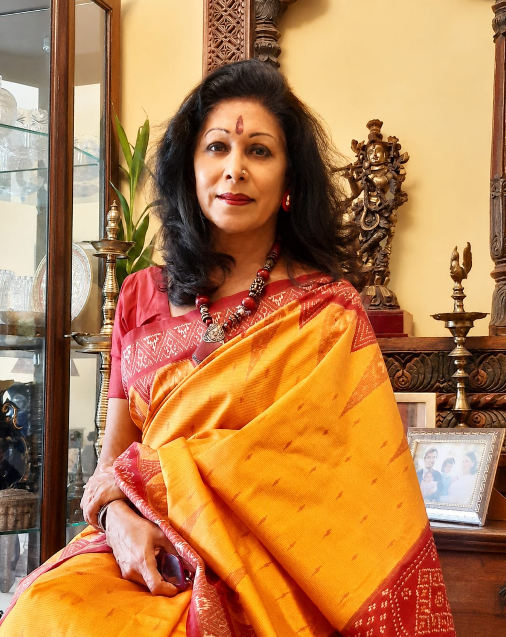
Q. Your biography by Maya Parijat explores multiple dimensions of your personality. Did it change how you reflect upon your journey?
Ans- “It does not really change my inner journey. I look at it with a certain sense of detachment. What is written is an external narrative, and it does not define who I am or what I seek.
For me, what truly matters is the continuous search for depth, both within Kathak and within myself. I do not see Kathak as just performance. It is a field of scholarship. It involves reading, study, and understanding of many disciplines such as history, psychology, and architecture.
My relationship with dance is not something fixed. It is a constant process of exploration, of learning, and of going deeper.”
Q. As an artist, what motivates you and what is your mantra of success?
Ans- “First of all, the word success is very relative. What may seem like success to one may not be so to another.
Even today, as I approach the age of seventy six, I continue my riyaaz. I continue to go deeper, to seek, to learn. Every moment, every second, every day brings something new, and I remain a willing learner.
I learn, I share, and I observe. What truly motivates me is the beauty around us, the diversity of people, cultures, and perspectives. It is this richness that inspires me. Each individual has something unique to offer.
One must learn to see and absorb that beauty, to engage with it, and to grow through it. That continuous process of learning and appreciation is what keeps me moving forward.First of all, the word success is very relative. What may seem like success to one may not be so to another.”
Q. What advice would you give to young artists?
Ans- “There are no shortcuts in life. What you make of your life and yourself is entirely your own decision. It requires clarity, patience, and a willingness to choose depth over immediacy.
As I often say, (she gives a very philosophical example)
“Do you want to be like a firecracker, dazzling and spectacular for a moment, lighting up the sky only to disappear within seconds, leaving behind nothing but smoke? Or do you want to be like an incense stick, slowly and steadily burning, spreading fragrance all around, a presence that lingers even after it is gone?”
The choice is yours. Whether to seek momentary brilliance or lasting impact. A life of true meaning is built gradually, with quiet strength and enduring grace.”
Q .How do you see Indian classical arts contributing to spiritual and emotional strength in today’s fast paced world?
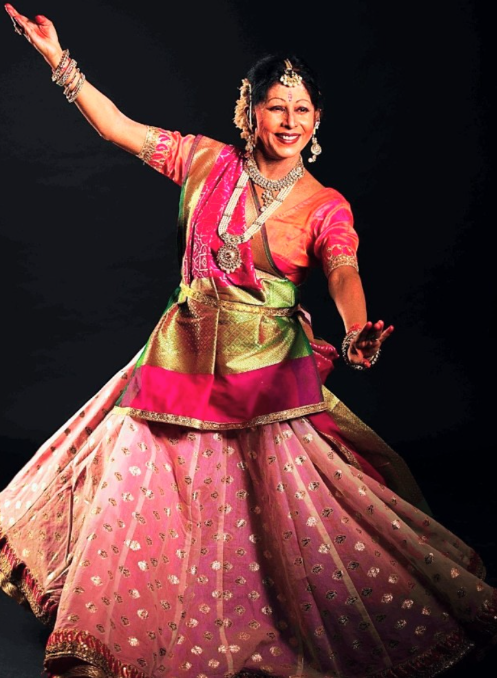
Ans – “If you reflect on the COVID period, it revealed something very significant.(Art has the quiet strength to sustain you. It nurtures the mind, steadies the emotions, and keeps creativity alive even in the most uncertain times). A large number of people faced stress, anxiety, depression, and emotional instability. But if you observe closely, very few classical artists were affected to that extreme.
That itself speaks of the inner strength that classical arts cultivate. They give you a sense of grounding, a certain balance within, which holds you steady even when everything around you feels uncertain.
For me, classical arts are not merely about performance or presentation. They work at a much deeper level. They discipline the mind, centre the emotions, and connect you to something beyond the immediate.
In a fast paced world where everything is constantly changing, this inner anchoring becomes essential. And that is what classical arts quietly provide, strength, stability, and a deeper sense of being.”
Q. What message would you give to young women and girls?
Ans – “The shakti lies within you. Do not wait for the world to give you space. You must create your own path. Have conviction, have passion, and hold on to your values. If your foundation is strong and your intent is clear, you will find your way, sooner or later.”
I strongly believe that one must not depend on external validation or support to move forward. When we were growing up, we did not wait for opportunities to be handed to us. We worked, we challenged limitations, and we built our own place through determination.
What truly matters is inner strength, clarity of purpose, and the courage to stay committed to your path. If your values are right and your approach is sincere, success will eventually follow.”
Q. Since you come from Bihar, what is it that gives you strength about the place and the people?
She speaks of Bihar with pride, seeing it as a cradle of Indian civilisation that has contributed immensely to mathematics, philosophy, political thought, and the performing arts, a land rich in history and learning.
When asked about her life and philosophy, she reflects a rare discipline and balance, shaped by long hours of work, regular practice, and a quiet commitment to moderation. She finds joy in what she does, draws strength from people, and remains deeply appreciative of the diversity around her, which keeps her grounded.
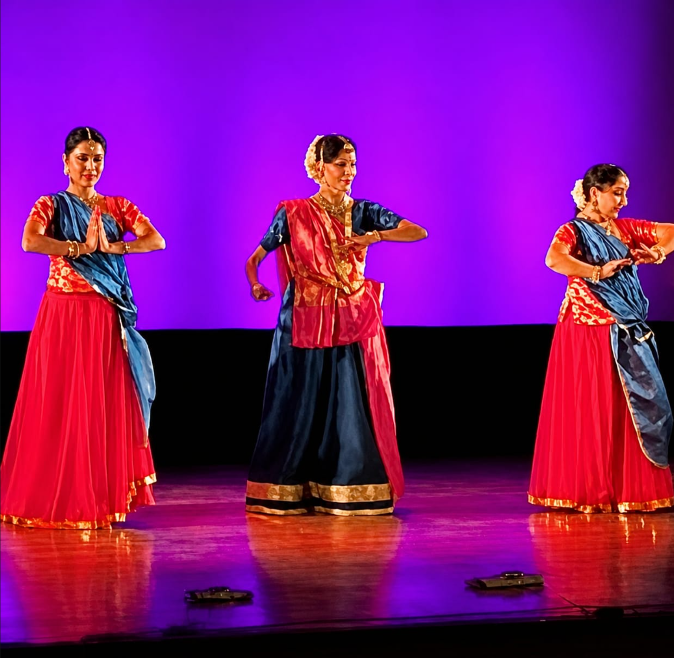
For her, a good life is not defined by wealth or status, but by character, by whether one is respected for who they are rather than what they possess. Her belief remains simple yet profound, to be a good and sensitive human being, to work with passion and depth, and to keep one’s values intact. In the end, her journey goes beyond any single identity. It is not just that of a dancer, a civil servant, or a scholar, but of a life lived fully, where discipline and passion come together, and where every movement becomes an expression of thought, turning life itself into a lasting work of art.
As the conversation draws to a close, what remains is not merely the story of an accomplished artist, but the quiet unfolding of a life lived with discipline, purpose, and depth. In Shovana Narayan, there is no separation between art and existence; Kathak is not something she performs, it is something she lives. Each step, each pause, each expression carries within it years of reflection, learning, and an unwavering commitment to her path.
Her journey is not defined by moments of applause, but by the constancy of her dedication, by the strength to balance worlds, and by a mind that continues to seek even after decades of mastery. There is a rare stillness in her presence, a sense of clarity that comes from knowing that true success lies not in recognition, but in the integrity of one’s work and the values one upholds.
What she leaves behind is more than a legacy of performances. It is a way of being. A reminder that when life is lived with sincerity, patience, and passion, it transforms into something far greater than achievement. Like the fading echo of ghungroos after the music ends, her journey lingers, not loudly, but deeply, with quiet grace and enduring meaning.