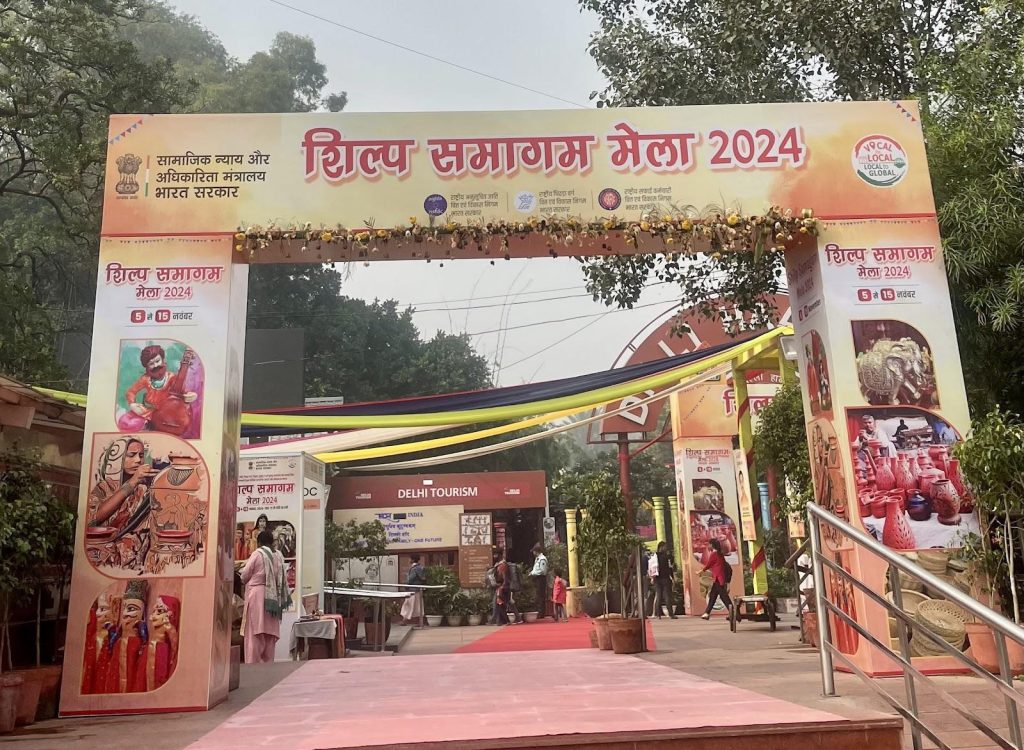
There are countless untold and unheard stories, often overshadowed by grand gestures that capture media attention. However, many of these overlooked narratives carry profound meaning and inspire countless individuals. One such story is that of the women artisans in India, whose craft and resilience, though rarely in the spotlight, are shaping communities and preserving cultural heritage bringing women in business.
Shilp Samagam 2024, organized by the Ministry of Social Justice and Empowerment, is a flagship event celebrating the craftsmanship and artistic talents of marginalized and underprivileged communities across India. The event aims to provide a platform for artisans, particularly from Scheduled Castes (SC), Scheduled Tribes (ST), and Other Backward Classes (OBC), to showcase their traditional and contemporary crafts. It also seeks to promote inclusivity, self-reliance, and economic empowerment through exhibitions, workshops, and networking opportunities with buyers and industries. By bridging the gap between rural artisans and urban markets, Shilp Samagam 2024 highlights India’s rich cultural heritage while fostering sustainable livelihoods for its artisans.
Initiatives like these help artisans get the right place to publicize them and generate a good customer base.
Various Women Artisans took part in this mela and we interacted with some of them to get to know their story and inspire everyone.
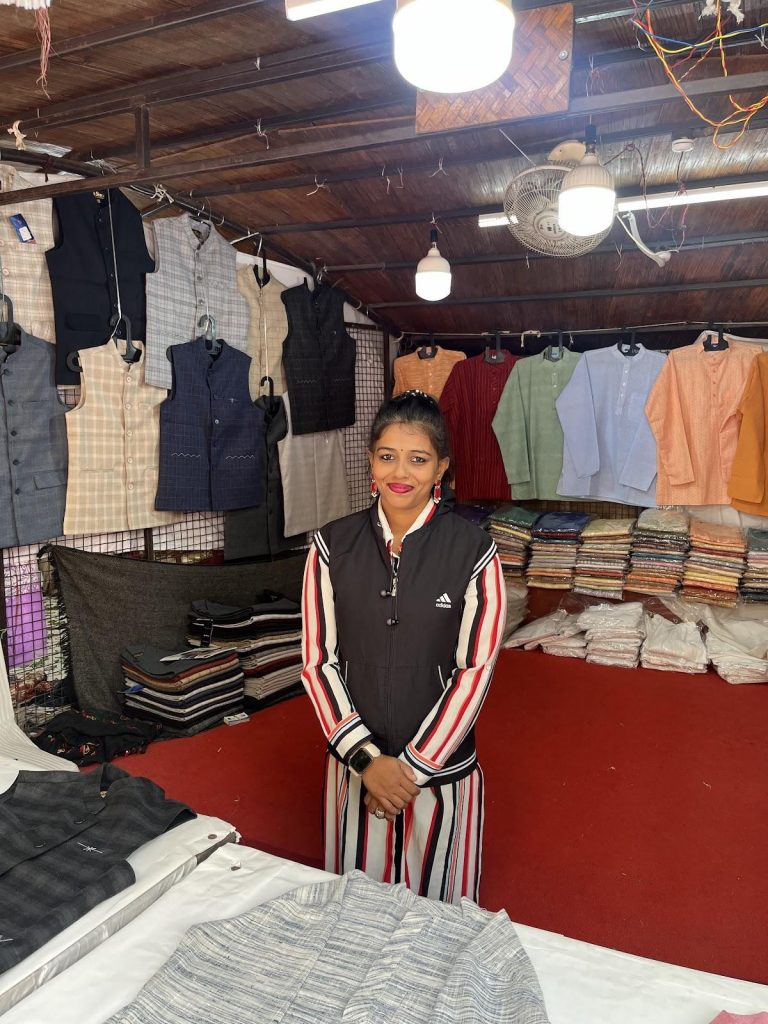
Sangeeta Ji – From Roorkee
Brotherly love is often understated, not expressed through grand gestures, but instead through quiet, unwavering support. One such example is the inspiring relationship between Sangeeta Ji and her brother, Ram Kumar Pal. Ram, who has worked with the Ministry of Social Justice and Empowerment, has been a pillar of support for his sister, guiding and encouraging her as she ventured into the business world. His knowledge and experience were instrumental in helping Sangeeta navigate the challenges of entrepreneurship.
For the past three years, Sangeeta has been running her clothing business, a journey that began with little knowledge of the industry but has since flourished due to her hard work and the guidance of her brother. With his support, Sangeeta learned the ropes of the clothing market and developed her skills through hands-on experience. The Ministry of Social Justice and Empowerment also played a crucial role by providing a loan that enabled her to kickstart her business and become more efficient in her work.
Sangeeta’s entrepreneurial journey began during the challenging times of the COVID-19 pandemic. She was determined to support her family and pursue her passion for fashion. Specializing in handwoven khadi kurtas, mufflers, and jackets, her business not only promotes sustainable fashion but also provides employment to local workers, many of whom had no other means of earning a living. By hiring local talent, Sangeeta has created a team that supports each other’s growth, both professionally and personally.
Her business has a store in Roorkee, and through various sales events and melas, she has gained significant brand visibility and expanded her customer base, reaching clients across Delhi and beyond. These melas have proven to be a valuable platform for promoting her products, building a strong presence in the market, and securing sales.
One memorable moment Sangeeta shared was about her first experience selling in Delhi. Initially, she struggled with pricing and negotiating with customers. She recalled a situation where she sold a kurta worth 600 rupees for just 400 rupees, after a customer bargained heavily. Feeling uncertain, she turned to her brother for guidance. Ram calmly reassured her, teaching her essential sales techniques and how to manage such situations with confidence and composure.
Sangeeta’s advice to women entrepreneurs is invaluable: “In the beginning, you will face many struggles. But if you don’t struggle, you won’t learn or grow. Don’t lose hope when things don’t go as planned. Keep trying, and you will eventually find success. The key is to never lose your self-confidence. Women are incredibly strong and capable, and they have the power to achieve anything they set their minds to. God has given women the strength to handle challenges in all aspects of life, and running a business is no exception.”
Through her journey, Sangeeta has come to believe that women are just as capable as men in any field, including business. She often says, “If a woman can carry and nurture a child while managing countless other responsibilities, running a business is one of the easiest things she can do.”
Sangeeta’s story is not just about business success—it is about the power of family support, resilience, and the unwavering belief in one’s potential. With her brother’s encouragement, she has overcome challenges and built a thriving business that not only benefits her family but also empowers those around her.
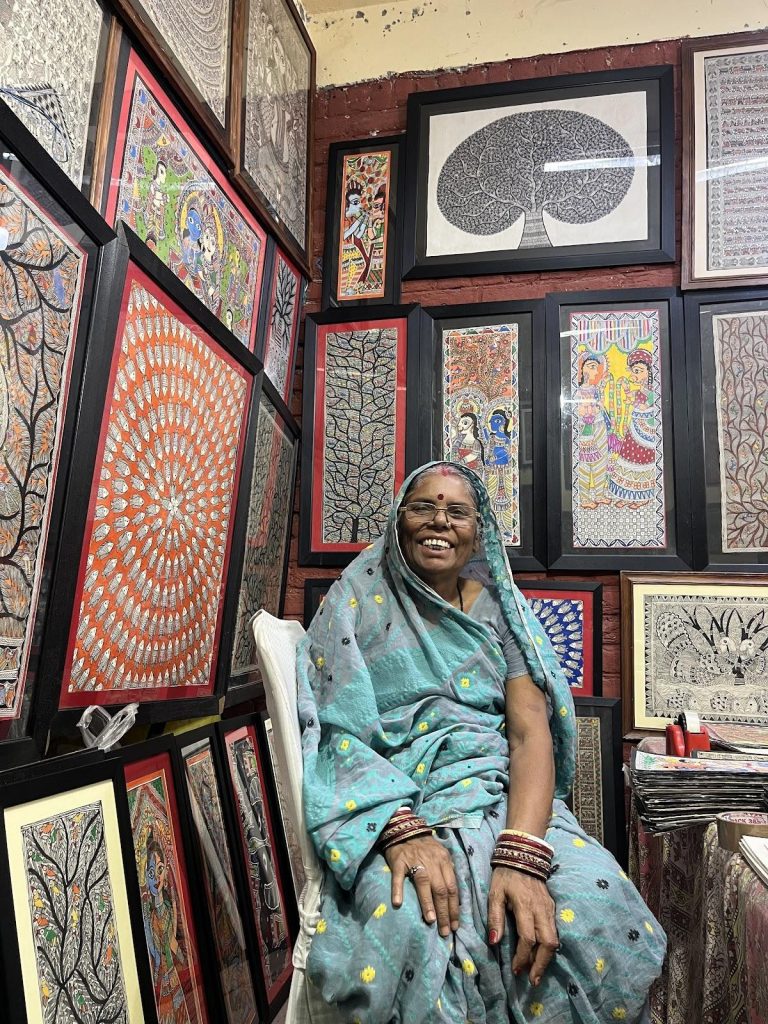
Urmila devi – From Bihar
Urmila Ji, a recipient of the prestigious Bihar State Gold Award in Folk Art, is a remarkable artisan whose dedication to preserving and promoting Madhubani painting has not only earned her accolades but has also transformed her life and that of her family. Her journey as an artist began when she learned the art form from her mother-in-law, a tradition that Urmila Ji has carried forward and passed down to her daughters and daughters-in-law, ensuring that this rich cultural heritage continues for generations to come.
Urmila Ji’s first exposure to selling her paintings was when she accompanied her husband to a mela in Delhi. Though visitors from Bihar frequently sought her paintings, these melas provided her with the crucial exposure and sales platform she needed to grow her business. Over the years, she has expanded her reach, gaining recognition for her unique craftsmanship and the intricate beauty of her Madhubani works.
Her story is one of perseverance. Despite her humble beginnings, where her husband worked as a rickshaw puller to support their family, Urmila Ji has built a thriving business. Today, she has transformed her art into a sustainable livelihood, allowing her husband to leave his rickshaw-pulling job and focus on supporting her in other ways. The saying is true: when you empower a woman, you empower her entire family.
In 1987, Urmila Ji’s talent was formally recognized when she was awarded by the Ministry of Textiles as an artisan. However, her most defining moment came when she sold her first set of paintings to a man named Rajak, who assured her that her works would earn her recognition. “You will get the award,” he promised her. As fate would have it, Rajak’s words were prophetic, and Urmila Ji soon received the Bihar State Gold Award for her exquisite work.
Reflecting on that life-changing moment, Urmila Ji shared, “I had three paintings when Rajak came to me. He saw them and asked if he could take them. I agreed, not knowing that they would lead to my receiving the state award. I later learned that my paintings were selected and that my work had truly been recognized.”
Urmila Ji’s journey to recognition is a testament to her relentless pursuit of excellence. After receiving the award, her work gained wider exposure, leading to further opportunities to showcase her paintings. Over the years, she has participated in numerous fairs and exhibitions, continually honing her craft and learning valuable skills in marketing, even though she never received formal training in sales or English. Despite the language barrier, Urmila Ji’s passion for her art and her ability to engage with customers has been key to her success.
Today, Urmila Ji not only supports her own family but also empowers others. She has trained 15 artisans, many of whom work alongside her, creating beautiful pieces of Madhubani art. Additionally, she has shared her knowledge with over 50 children in Bihar, ensuring that the tradition of Madhubani painting continues to thrive within her community.
She imparts valuable lessons to the younger generation, encouraging them to pursue their passions and embrace hard work. “The children today should move forward and learn,” Urmila Ji says. “Just as we grew, they must grow too. Education and work go hand in hand—both are essential for progress.”
Urmila Ji’s story is one of resilience, dedication, and the power of family support. Her ability to transform a traditional art form into a successful business while uplifting those around her speaks to the strength and determination of women everywhere. Through her hard work and unwavering belief in her craft, Urmila Ji has not only secured her place in the world of folk art but has also become an inspiration for aspiring artists and entrepreneurs, proving that with passion and perseverance, anything is possible.
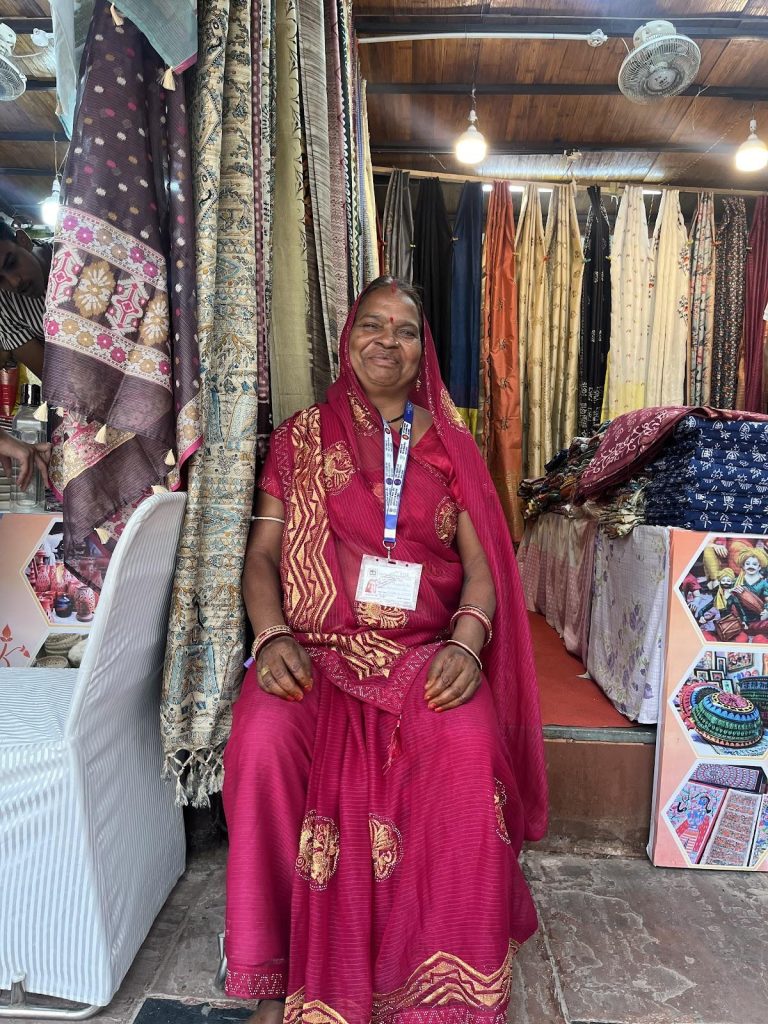
Bhagwati bai – Madhya Pradesh
Bhagwati Bai’s story is a testament to the power of determination, skill development, and community support. Hailing from Jhagariya, Kharagpur, Madhya Pradesh, Bhagwati Bai’s journey into entrepreneurship began with humble origins. Initially, she worked as a laborer on construction sites, a role that provided limited prospects for growth. However, everything changed when she became part of a Self-Help Group (SHG), which opened the doors to a new world of opportunity.
“I had no knowledge of block printing or textile work before,” Bhagwati Bai shared. “But when I joined the SHG, I received the training I needed. I learned the craft, and soon, I was able to take the first steps toward building my own business.”
With her newfound skills, Bhagwati Bai began teaching other women in her community, passing on the knowledge she had gained. Together, they formed a group, learning and working collectively. Over time, they expanded their offerings to include various types of fabric and embroidery work. Bhagwati Bai and the women in her group worked with a variety of textiles, including jari silk, raw silk, jute silk, and chandai cotton silk, incorporating intricate block printing techniques that added unique beauty to each piece.
The training she received, along with a small loan from the government, helped Bhagwati Bai and her group take their skills to the next level. “The loan helped us get started, and we were able to purchase materials and equipment. This allowed us to expand our production and start creating more products to sell,” she explained.
In 2008, the group formally launched their business, marking the beginning of a successful entrepreneurial journey. Bhagwati Bai’s decision to join the block printing industry and help other women in her community follow suit has been a transformative experience. The SHG provided the initial push, but it was Bhagwati Bai’s commitment and leadership that propelled the group toward success.
As they grew, the women in Bhagwati Bai’s group began participating in fairs and exhibitions to showcase their work. Their first major event was in Delhi, where they experienced firsthand the impact of such gatherings. “This was the first time we came to a fair, and it was a great experience. We met many people, not just from Delhi but from Gurgaon and other parts of the country. We began receiving orders from customers in MP, Delhi, and even further afield,” Bhagwati Bai said, reflecting on her early experiences at fairs.
The exposure from these events has been instrumental in helping them build a loyal customer base. Bhagwati Bai’s products are now sold to customers who place bulk orders, further expanding the reach of their business. “Customers from different cities often contact us for their orders. It’s a good feeling knowing that our work is appreciated,” she shared.
The growth of Bhagwati Bai’s business is not just about profits; it’s about empowering other women in her community. She now employs 24 women, all of whom play a key role in the creation and marketing of their products. “We train the women in the basics of block printing and sewing, and together, we help each other,” Bhagwati Bai explained. “While I focus on teaching the skills, my husband and others in the group help with the sales, packing, and distribution.”
Her success has led to recognition from the government and other institutions, which have supported her by providing loans, training, and opportunities for growth. Despite the challenges, Bhagwati Bai’s leadership and commitment to her craft have made her a role model for other women aspiring to enter the business world.
Reflecting on her journey, Bhagwati Bai emphasized the importance of empowerment through skill-building. “A woman should know how to handle her business, how to block print, how to sew, and how to take charge of her work,” she said. “When women learn a skill, they can support their families and build a future for themselves.”
As her business continues to grow, Bhagwati Bai remains committed to helping other women achieve financial independence and confidence. Her advice to aspiring entrepreneurs is simple yet profound: “Start small, learn the craft, and never give up. If you stay determined and work hard, you will see success.”
Bhagwati Bai’s story is not just one of personal triumph but also a story of community upliftment and empowerment. Through hard work, perseverance, and a strong sense of purpose, she has not only transformed her own life but also inspired others to follow in her footsteps. Her journey shows that when women are given the right tools and opportunities, they can build thriving businesses and become pillars of support for their families and communities.
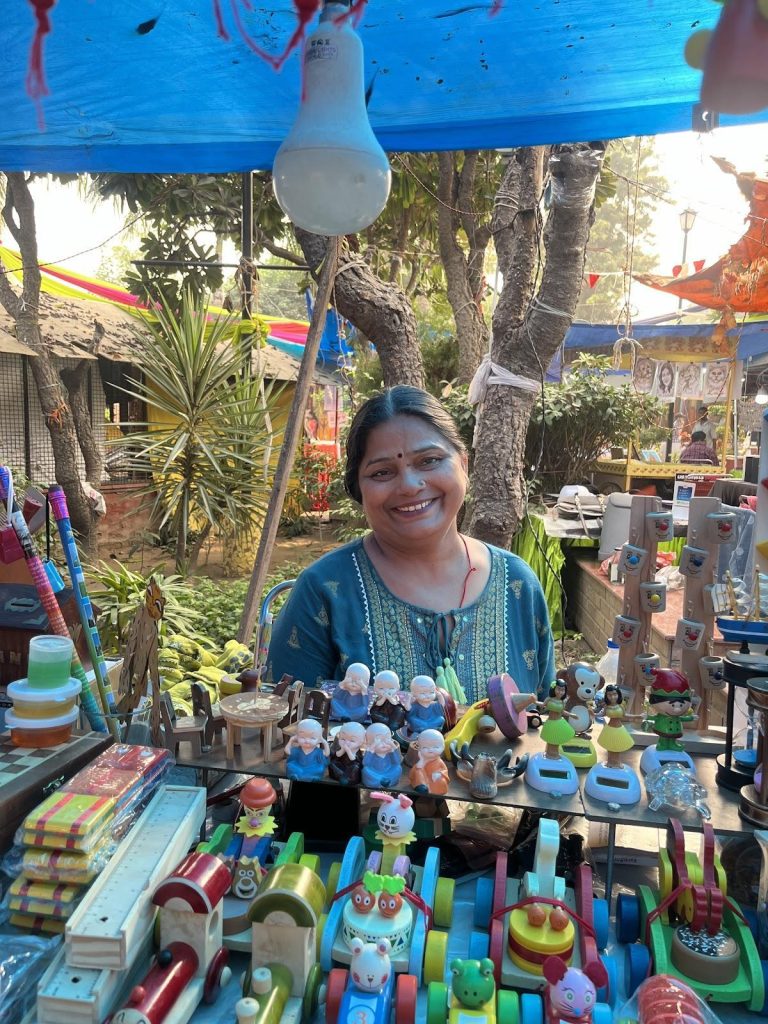
Meera ji – wooden toy – Uttar Pradesh
Meera Ji’s story is one of resilience, determination, and the enduring spirit of entrepreneurship. A handicapped widow, Meera Ji now runs her family’s generational business—wooden toys—a tradition that has been passed down through multiple generations. However, her involvement in the business was not solely born from necessity; it was always a passion she nurtured quietly, alongside her husband.
The business itself dates back over 70 years, starting with Meera Ji’s father-in-law, who initially crafted wooden toys. Over time, her husband, along with his brothers, took over the family trade, ensuring that the craftsmanship and expertise were passed down. “My father-in-law started this work decades ago, and my husband continued it,” Meera Ji shared. “It was always a part of our lives, and I helped him with it. When my husband passed away, I knew I had to step up.”
While tragedy struck her personal life, Meera Ji’s resolve to keep the family business alive grew stronger. Today, alongside her daughters, she continues to create and sell wooden toys, ensuring that the legacy of her husband and father-in-law lives on. “Now, it’s my daughters and I who are running the business. We make wooden toys, and this work is dear to me,” she says.
Despite being new to the fair scene, Meera Ji recognizes the value of participating in exhibitions. “This is my first time at a fair like this. My husband used to go to fairs in places like Udaipur, Mumbai, and Pune,” she explained. Though Meera Ji’s business has not always garnered the sales she hoped for at these fairs, she views each opportunity as a learning experience. “Some fairs bring good sales, while others result in losses. But it’s all part of the journey,” she admits.
Her passion for business did not begin out of necessity alone—Meera Ji had always been interested in crafts. “Before I got married, I used to do crochet work and handmade jewelry,” she reveals. Despite the challenges of balancing business and family, she has found joy in what she does, learning new skills along the way. “I enjoy the process of creating and selling our wooden toys. I believe every woman should have the opportunity to stand on her own feet,” she asserts with a smile.
Although Meera Ji faced financial struggles after her husband’s passing, her resilience kept her moving forward. “I have children who need support, and I need to ensure they get an education. That’s why I continue with the business,” she says, her eyes reflecting her deep commitment to her family.
While Meera Ji hasn’t yet received formal support or funding from the government, she remains hopeful. “I applied for a disability card, but nothing has come through yet. It takes time, but I believe it will eventually happen,” she reflects. Despite these challenges, she stays determined to grow her business and ensure a better future for her children.
Looking to the future, Meera Ji encourages other women to follow in her footsteps. “Women should never feel limited by circumstances. They should learn to stand on their own two feet,” she says, her voice steady with conviction. “Doing business has taught me many things—how to interact with people, how to sell, how to market. It’s not just about making money; it’s about empowerment. Every woman should have the opportunity to work, to be self-sufficient, and to provide for her family.”
Meera Ji’s story is a testament to the strength of women in business. From a humble beginning, she has not only kept her family’s legacy alive but is also shaping a path forward for the next generation. “I like this work,” she says, “and that’s why I’m moving forward. I want to set an example for my children, and for other women, that no matter the odds, we can create our own success.”
Monika ji – Kolhapur, Maharashtra
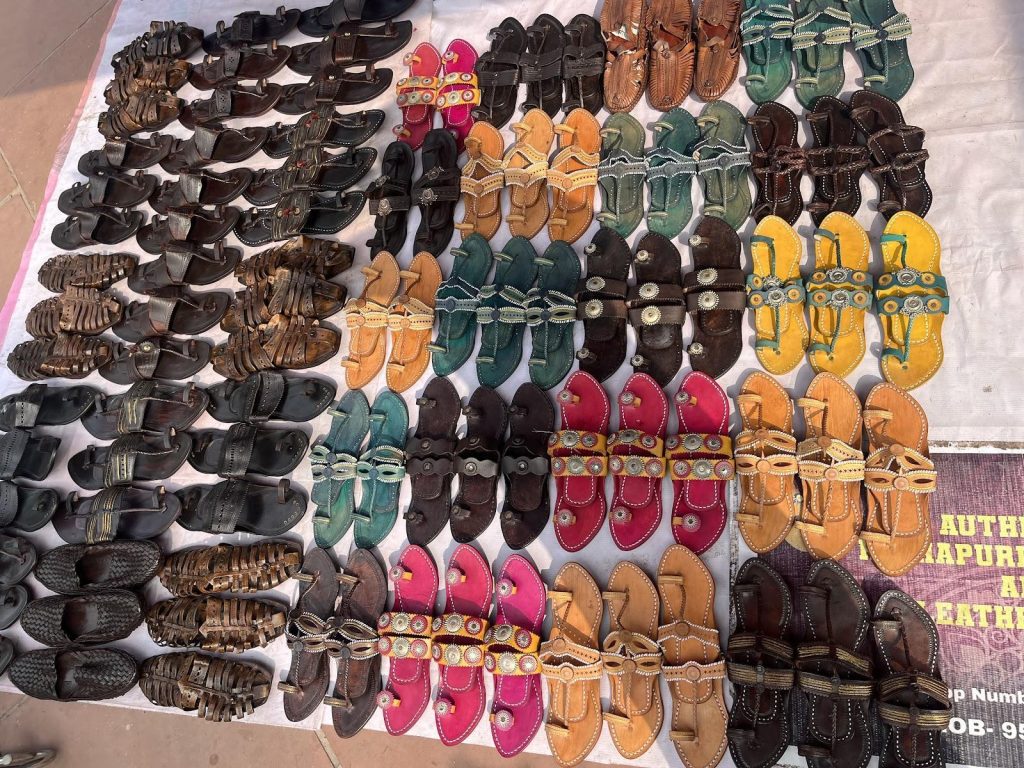
In the heart of Kolhapur, Maharashtra, where tradition meets craftsmanship, Monika Ji carries forward a legacy that spans over a century. She is the fourth-generation owner of a renowned business that specializes in the world-famous *Kolhapuri chappals, a traditional Indian footwear that has earned its place in fashion and culture worldwide.
Kolhapuri slippers are not just a product—they are a symbol of heritage, comfort, and intricate craftsmanship. Monika Ji, deeply passionate about her family’s craft, is hands-on in every aspect of the business. “I design each pair of slippers myself,” she shares, emphasizing the level of care and detail she puts into her creations. Beyond the traditional designs, Monika Ji’s business also offers customized slippers, allowing her customers to express their unique style.
The roots of this business stretch back to her great-great-grandparents, who first began crafting these exquisite slippers. Today, it remains a thriving family business, with both men’s and women’s Kolhapuri chappals, along with a range of other handcrafted items such as keychains, purses, belts, and even slippers for children. The community plays a vital role in this venture, as local artisans and workers contribute to the production, helping keep the process rooted in Kolhapur’s rich tradition.
Monika Ji’s journey into entrepreneurship has been supported by various initiatives, particularly from the government. “The Ministry provided a loan for raw materials and also gave us the opportunity to attend trade fairs and melas, where we can showcase our products and connect with customers,” she explains. These melas, which are held every two years, have proven crucial for expanding sales and visibility. “We’ve been participating in melas for over 20 years, and it’s always a great opportunity to meet new customers and strengthen old relationships.”
As a result of her consistent participation in these fairs, Monika Ji has not only built a loyal customer base across India but has also established *Kolhapuri chappals* as a must-have item for anyone seeking authentic, high-quality Indian footwear. “People come to us from all parts of India to buy these slippers, and we’ve built a reputation for excellence,” she proudly shares.
In addition to maintaining the traditional methods of crafting these slippers, Monika Ji has adapted to modern business practices. She has incorporated digital payment methods, enabling customers to purchase her products with ease. The business has also embraced social media, with an Instagram page showcasing their latest designs and connecting with a wider audience. “It’s important to stay connected with our customers through digital platforms,” she notes, highlighting the role of online engagement in expanding her business.
Every aspect of production, from designing to packaging, is done by hand, preserving the craftsmanship that Kolhapuri chappals are known for. “Each product is made with love and care, which is why they are so cherished by our customers,” says Monika Ji. This focus on quality and authenticity has helped her business not only thrive locally but also gain recognition on a national level.
For Monika Ji, the journey has been one of learning, growth, and creativity. “The melas and fairs have allowed me to build new connections and gain valuable insights from our customers. They often share new ideas for products, which helps us innovate and stay relevant,” she reflects. Her ability to listen to her customers and incorporate their feedback has been a key factor in her success.
As she looks toward the future, Monika Ji believes that entrepreneurship is a path that every woman should consider. “Everyone should have the opportunity to start a business, work, and grow. It’s an empowering experience,” she states. With her commitment to preserving tradition while embracing innovation, Monika Ji’s Kolhapuri slippers business continues to be a shining example of how passion, craftsmanship, and community can create lasting success.
Her story serves as an inspiration to many, showing that with hard work and dedication, one can not only sustain a family legacy but also elevate it to new heights in a rapidly changing world.
UkriiCrafts – Nagaland
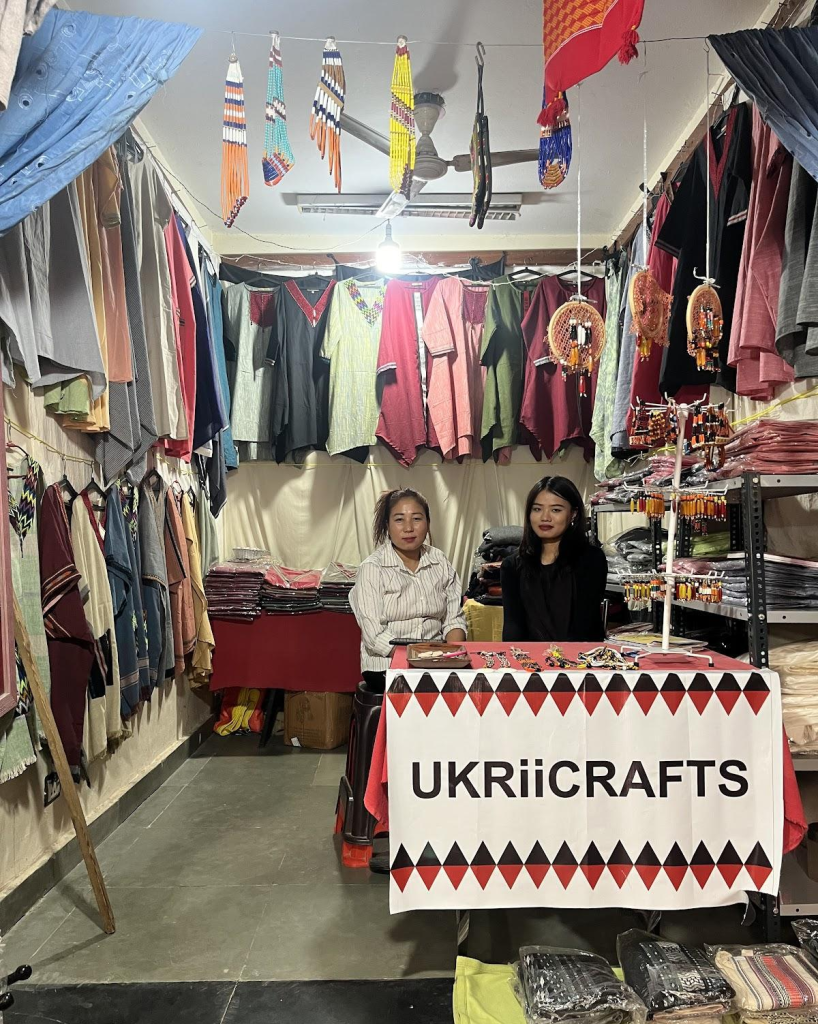
Women in every state are working hard to move towards self reliance. North east has its own speciality and bringing it live by ukricrafts. It is based in Nagaland, is a distinguished brand that showcases the rich cultural heritage and exceptional craftsmanship of the Naga people. Specializing in handcrafted textiles, jewelry, and home decor, UkriCraft blends traditional Naga techniques with contemporary design, creating unique products that reflect the region’s vibrant history and artistry. The brand’s artisans, many of whom are women, skillfully craft each piece using indigenous materials such as cotton, silk, and natural dyes. Through UkriCraft, the artisans not only preserve and promote their cultural identity but also create sustainable livelihoods for local communities. The brand has garnered recognition for its commitment to ethical craftsmanship, empowering local artisans and providing them with a platform to reach a global audience. UkriCraft is a true testament to the spirit of Nagaland’s artisans, offering exquisite, handcrafted creations that tell the stories of their rich cultural roots.
The stories of women artisans in Shilp Samagam 2024 are a powerful testament to the resilience, creativity, and determination that define these exceptional women. From the heart of rural villages to the bustling trade fairs, these artisans have not only preserved their traditional crafts but have also adapted to changing times, embracing modern tools and platforms to grow their businesses. Their journey is an inspiring one, as they juggle multiple roles as caregivers, entrepreneurs, and cultural ambassadors. Through their work, they continue to enrich India’s rich artisanal heritage, while empowering themselves and their communities, proving that when women lead, entire families and societies flourish.
As these artisans share their stories of struggle and success, it is evident that their impact extends far beyond the markets they serve. Their stories resonate with a broader message of empowerment, self-reliance, and the importance of nurturing talent at every level. With the support of initiatives like Shilp Samagam, which brings these artisans into the spotlight, these women are gaining the recognition they deserve and the resources they need to expand their reach. The future of India’s handcrafted legacy is in the hands of these women, and with each story told, they inspire countless others to embrace their craft, build their businesses, and achieve greater independence.